
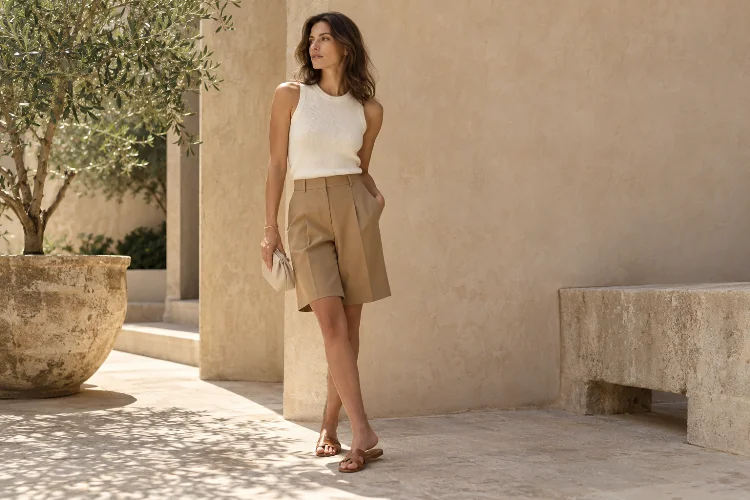
Summer fashion often creates a strange contradiction. You want to wear fewer clothes because of the heat, yet you also want your outfit to look complete, polished, and interesting.
That pressure can easily lead to overstyling. Extra jewelry appears, another layer gets added, several colors compete for attention, and suddenly an outfit that started effortlessly begins to feel overly calculated.
Learning how to build sophisticated summer outfits without overstyling requires a different mindset. Instead of asking what else an outfit needs, it is often better to ask what can be removed while keeping the overall look intentional.
Great warm-weather style depends less on quantity and more on proportion, fabric, fit, texture, and visual balance. A well-cut white shirt with relaxed trousers can look considerably more refined than a complicated combination of statement pieces.
The goal is simplicity with purpose. When every element has a clear role, even the easiest summer outfit can look polished rather than plain.
1. Start With a Strong, Simple Foundation
Sophisticated outfits usually begin with surprisingly ordinary pieces.
A white cotton shirt, linen trousers, a minimalist dress, tailored shorts, or a fitted tank can become the foundation of countless summer looks. What matters is choosing versions with good shape, comfortable fabric, and enough structure to hold the outfit together.
Current minimalist summer styling continues to rely heavily on simple wardrobe staples combined with thoughtful proportions and selective accessories rather than excessive decoration.
For example, consider a black tank tucked into high-waisted cream trousers. The combination contains nothing dramatic, but a clean neckline, proper trouser length, and balanced fit can make it instantly sophisticated.
Starting simple also gives you room to adjust the outfit later. When the foundation is already visually busy, every additional styling choice creates more competition.
Think of your base pieces as the architecture of the outfit. Accessories should support that architecture rather than rescue it.
2. Prioritize Fabric Quality Over Extra Details
During summer, fabric becomes highly visible because there are fewer layers hiding the construction of your clothes.
Linen is particularly valuable because it combines breathability with natural texture. Vogue and Harper’s Bazaar both continue to highlight linen as a warm-weather material capable of moving easily between relaxed and polished dressing.
Cotton poplin, lightweight silk, fine knits, and quality linen blends can perform a similar role.
A plain linen shirt often looks more elevated than a synthetic blouse covered in embellishments because the fabric itself contributes character. Natural creasing gives linen a relaxed texture, while structured collars or tailored seams maintain enough refinement.
Pay attention to how fabric moves as well.
Flowing trousers should fall cleanly instead of clinging awkwardly. Dresses should move naturally when walking. Shirts should feel relaxed without collapsing completely around the body.
This is one reason sophisticated summer style often feels effortles: much of the visual interest comes from the material itself.
3. Use Proportion Instead of Decoration
When an outfit feels boring, many people immediately reach for another accessory.
Try adjusting the proportions first.
Pairing a fitted top with relaxed trousers creates contrast between narrow and wide silhouettes. An oversized shirt worn with tailored shorts achieves a similar effect. A long column dress with minimal sandals creates vertical movement without needing prints or heavy styling.
Proportion makes basic clothes visually interesting.
Recent summer fashion coverage also shows how linen trousers, oversized shirts, longer shorts, minimalist dresses, and relaxed tailoring can create polished looks largely through silhouette rather than decorative complexity.
One useful rule is to avoid making every piece equally oversized or equally fitted.
If you wear a loose shirt, define the rest of the silhouette through slimmer trousers, shorts, or a strategic tuck. If your trousers are wide and flowing, a cleaner top can create balance.
The outfit then looks considered without appearing heavily styled.
4. Limit the Color Story
Sophisticated summer outfits often have a surprisingly restrained color palette.
That does not mean everything must be beige.
The principle is simply to create visual continuity. Two neutrals with one accent color are usually easier to control than four unrelated shades competing at once.
White trousers with a navy tank and brown leather sandals create a clear color story. Cream linen worn with chocolate accessories feels warm and cohesive. Black and white can look sharp, while tonal combinations such as ivory, sand, and camel produce softer sophistication.
Monochromatic dressing works especially well during summer because lighter fabrics naturally create variations in texture and shadow.
If you want stronger color, allow one garment to lead.
Bright red trousers, for example, can work beautifully with a white shirt and restrained accessories. The color becomes the statement, which means the rest of the outfit does not need to fight for attention.
Knowing when to stop is an underrated styling skill.
5. Choose One Point of Visual Interest
One of the easiest ways to avoid overstyling is to decide what you want people to notice first.
Maybe it is the dress.
Maybe it is a sculptural handbag.
Maybe it is an unusual pair of earrings, beautiful sandals, or bright trousers.
Once that focal point has been established, supporting pieces should become quieter.
This approach is particularly useful because summer wardrobes often contain fewer garments. Vogue notes that accessories can provide personality when warm-weather outfits become more pared back, while statement bags and playful details can make minimalist clothing distinctive.
Imagine wearing an ivory linen dress with a dramatic woven bag. Adding oversized earrings, colorful shoes, multiple necklaces, and a statement belt may dilute the effect rather than improve it.
Allowing one element to dominate creates stronger visual hierarchy.
Sophistication often comes from editing rather than adding.
6. Keep Accessories Deliberate
Minimal accessories do not mean no accessories.
They simply need to earn their place.
A slim leather belt can define a loose silhouette. Sunglasses can introduce structure around the face. Small hoops or sculptural earrings add polish without creating unnecessary weight.
Footwear is particularly important.
Simple leather sandals can make a linen outfit feel refined, while loafers can introduce contrast to a lightweight dress. Minimalist summer dresses are often styled with similarly streamlined footwear and uncomplicated bags because these pieces preserve the clean silhouette.
Try applying a quick editing test before leaving home.
Look at the outfit and identify the least necessary accessory. Remove it for a moment. If the outfit feels clearer rather than unfinished, leave it off.
This prevents accessorizing from becoming automatic.
7. Let Texture Create Depth
Minimal styling can sometimes become visually flat.
Texture solves that problem without increasing complexity.
Combine smooth cotton with woven leather, crisp poplin with linen, or a sleek dress with a raffia bag. Because the materials interact differently with light, the outfit gains depth even if the colors remain extremely simple.
A tonal outfit provides a perfect example.
Imagine cream linen trousers, an ivory ribbed tank, tan leather sandals, and a woven handbag. The palette is restrained, yet linen, ribbing, leather, and weaving create several layers of visual interest.
Texture therefore allows you to keep the number of colors and garments low.
This is particularly valuable when creating a sofisticated wardrobe because it makes simple clothes appear richer without depending on obvious logos, heavy prints, or constant trend changes.
8. Use Relaxed Tailoring for Instant Polish
Tailoring does not have to mean heavy blazers and formal suits.
Summer tailoring is softer.
Think wide-leg trousers, waistcoats, long tailored shorts, lightweight button-down shirts, or matching linen sets. Recent fashion coverage has repeatedly shown linen sets and tailored separates as effective ways to combine warm-weather comfort with refinement.
The advantage of tailoring is that the garment already provides shape.
A pair of pleated trousers can elevate a plain tank without additional styling. A matching set eliminates the challenge of coordinating multiple colors and silhouettes because the pieces already speak the same visual language.
You can then keep everything else simple.
Add flat sandals, understated jewelry, and a practical bag. The structure of the clothing does most of the work.
9. Consider Comfort Part of Sophistication
An outfit rarely looks effortless when the wearer is constantly adjusting it.
Comfort therefore matters aesthetically as well as practically.
Choose cuts that allow movement and fabrics appropriate for the temperature. Loose-fitting garments can also provide practical advantages outdoors.
The Skin Cancer Foundation notes that clothing construction, color, fabric composition, fit, and UPF rating influence UV protection, while loose clothing is preferable because tight fabric may stretch and allow more UV radiation through.
This does not mean every summer outfit needs specialist sun-protective clothing.
It simply reinforces the idea that good dressing should work with the environment rather than against it.
A lightweight long-sleeved shirt, relaxed trousers, sunglasses, and a wide-brimmed hat can sometimes feel more comfortable – and considerably more refined – than an outfit built purely around exposing as much skin as possible.
10. Create Personal Outfit Formulas
The easiest way to stop overstyling is to develop combinations you already know work.
These become personal outfit formulas.
You might repeatedly wear a tank with wide trousers and flat sandals. Another formula could be an oversized shirt with tailored shorts and loafers. A third might consist of a column dress, simple earrings, and a structured bag.
Repeating silhouettes is not boring.
It creates consistency, makes shopping easier, and helps you understand what genuinely suits your lifestyle.
You can still change fabrics, colors, shoes, or accessories while maintaining the same basic structure.
In practice, some of the most polsihed wardrobes rely on repetition far more than constant novelty.
Building sophisticated summer outfits without overstyling is primarily an exercise in restraint. Strong fabrics, thoughtful proportions, controlled color combinations, useful tailoring, and selective accessories can create far more impact than piling multiple trends into one look.
Start with a simple foundation and decide what deserves attention. Let texture replace unnecessary decoration, use accessories intentionally, and pay close attention to fit and comfort.
Most importantly, develop a few reliable outfit formulas that reflect how you actually spend your summer.
Before buying another statement piece, experiment with the clothing already in your wardrobe. Remove one accessory, adjust a proportion, or simplify the color palette. You may discover that looking more refiend often requires adding less rather than more.