
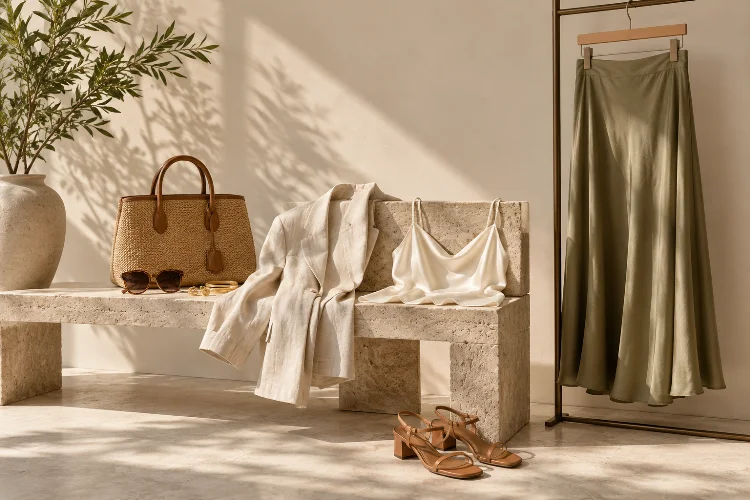
Summer dressing sounds simple until heat, humidity, work schedules, social events, and personal style all enter the equation. Suddenly, creating an outfit that looks sophisticated without feeling uncomfortable becomes much more complicated than throwing on shorts and a T-shirt.
That is where advanced summer styling strategies make a difference. Instead of relying on seasonal trends alone, polished warm-weather dressing is about controlling fabric, proportion, color, texture, and accessories.
The goal is to make an outfit appear intentional while keeping it practical enough for long, hot days.
The good news is that polished does not have to mean formal. Some of the strongest summer outfits are surprisingly relaxed. A loose linen shirt, tailored shorts, leather sandals, and a structured bag can look more refined than a complicated layered outfit.
Once you understand a few styling principles, creating effortless summer looks becomes far easier – and much more repeatable.
1. Build the Outfit Around Fabric Before Color
During cooler seasons, you can often choose an outfit based on appearance first and comfort second. Summer requires the opposite approach.
Fabric becomes one of the most important decisions because it determines airflow, movement, moisture management, and how the garment sits against your body.
Linen remains particularly useful because its textured structure creates a relaxed appearance while allowing comfortable airflow. Cotton is another practical option, especially in lightweight woven shirts, poplin dresses, and loose trousers.
Recent summer styling guides continue to emphasize linen and cotton as reliable foundations for warm-weather wardrobes.
However, fabric choice should also match the occasion. Pure linen naturally wrinkles, which can work beautifully for resort or casual outfits but may look too relaxed in certain professional settings. A linen blend or crisp cotton poplin can create a slightly more controlled finish.
Good summer style starts with breathablity, not decoration.
2. Use Proportion to Make Simple Outfits Look Intentional
One of the easiest ways to make inexpensive or basic clothing look sophisticated is to pay attention to proportion.
Consider a fitted tank worn with high-waisted wide-leg trousers. Neither piece is particularly complicated, yet the contrast between a narrow upper body and a flowing lower half creates visual balance.
The reverse strategy works too. An oversized linen shirt can look sharper when paired with slimmer shorts, a straight skirt, or fitted trousers.
You can also experiment with longer shorts. Tailored Bermuda styles, for example, create a more polished appearance than very short casual designs while remaining comfortable in warm temperatures.
The key is avoiding an outfit where every garment has exactly the same visual volume. If everything is oversized, the result can feel shapeless. If everything is extremely fitted, summer clothing can quickly become uncomfortable.
Think of proportion as architecture: every piece should help define the overall silhoutte.
3. Create a Controlled Summer Color Palette
Bright colors naturally appear during summer, but polished styling rarely requires wearing multiple statement shades simultaneously.
A more advanced approach is to create a controlled palette.
Start with two or three dependable neutrals such as white, cream, navy, chocolate brown, beige, olive, or soft grey. These colors become the foundation of your summer wardrobe and make individual pieces easier to combine.
Then introduce seasonal color strategically.
For example, cream trousers and a white tank can become much more interesting with a tomato-red bag. A navy linen dress could work with tan sandals and gold jewelry. Pale blue shorts can be paired with a crisp white shirt rather than another competing pastel.
Monochromatic outfits are another useful technique. Wearing slightly different shades of beige, white, blue, or brown creates depth without making the outfit visually busy.
The objective is not to avoid color. It is to control where the eye goes.
4. Master the “One Relaxed, One Refined” Formula
An effortless outfit usually contains some tension between casual and structured elements.
One simple rule is to combine one relaxed piece with one refined piece.
Take loose linen trousers. Pairing them with an equally loose beach shirt and rubber flip-flops may feel too casual for the city. Add a fitted tank, structured leather bag, and clean sandals, however, and the trousers immediately feel more deliberate.
The same principle applies to a relaxed cotton dress. Minimal gold jewelry, sleek sunglasses, a polished handbag, or elegant flats can transform the look without adding unnecessary layers.
Alternatively, soften structured pieces. Tailored trousers can feel surprisingly summer-friendly when worn with a simple ribbed tank and flat sandals.
This contrast prevents sophisticated summer outfits from appearing overly formal or overly casual.
5. Treat Accessories as Part of the Outfit Structure
Summer clothing tends to involve fewer garments, so accesories become disproportionately important.
During winter, a coat, knitwear, scarf, and boots naturally create visual depth. During summer, you may only be wearing a shirt and trousers. Accessories provide the missing dimension.
Instead of adding numerous small details, consider choosing one or two strong elements. A sculptural bag, oversized sunglasses, leather belt, statement earrings, or interesting sandals can give a minimalist outfit personality.
Jewelry works particularly well because it adds polish without adding warmth. Gold or silver earrings, a simple chain, or a few rings can make even a white tank and linen trousers appear finished.
Shoes deserve particular attention. A refined sandal, loafer, ballet flat, or minimal sneaker can change the perceived formality of the entire outfit.
The fewer clothes you wear, the more noticeable these details become.
6. Layer Without Creating Excess Heat
Layering might seem incompatible with summer, but sophisticated summer styling often involves very light layers.
The difference is that summer layering should create visual interest without insulation.
An oversized linen or cotton shirt worn open over a tank is a classic example. It provides structure and additional coverage while maintaining airflow.
A lightweight cardigan draped over the shoulders can also prepare an outfit for heavily air-conditioned interiors without significantly changing the outdoor look.
Sheer pieces, lightweight overshirts, sleeveless vests, and loosely woven knits can create similar effects.
Sun protection can also influence layering decisions. Clothing provides a physical barrier against ultraviolet radiation, although protection varies significantly depending on fabric construction, color, fit, and UPF rating.
UPF-rated garments can therefore be useful when spending extended periods outdoors.
The objective is strategic coverage rather than conventional layering.
7. Introduce Texture Instead of Adding More Pieces
When a simple outfit feels boring, the instinct is often to add something.
Sometimes the better solution is changing the texture.
Imagine an outfit consisting entirely of smooth cotton basics. It may feel visually flat even when the colors coordinate perfectly. Replacing one piece with linen, crochet, raffia, woven leather, or lightweight silk immediately adds depth.
Texture is particularly effective in neutral outfits.
A cream linen shirt, white cotton trousers, woven bag, and brown leather sandals may contain almost no dramatic color, yet each material reflects light differently. Those subtle contrasts make the outfit feel sophisticated.
This strategy also helps create expensive-looking summer outfits without relying heavily on designer pieces.
Visual richness does not necessarily require more clothing.
8. Make Grooming and Garment Condition Part of Styling
A sophisticated outfit can lose its impact quickly if the garments appear neglected.
Summer fabrics often wrinkle, absorb perspiration, and lose structure more quickly than heavier winter materials. Regular steaming, careful washing, and proper storage therefore become part of the styling process.
There is an important distinction between natural linen creasing and clothes that simply look neglected. Linen should feel relaxed and intentional, while collars, hems, and seams should still sit properly.
The same attention applies to footwear, handbags, and jewelry. Clean sandals and a well-maintained bag can make affordable clothing look significantly more polised.
Personal grooming also becomes more visible when outfits are minimal. Clean hair, simple skincare, tidy nails, and understated fragrance can contribute to the overall impression without becoming another fashion trend to follow.
9. Build Repeatable Summer Outfit Formulas
Advanced styling does not mean inventing a completely new combination every morning.
In fact, people with consistent personal style frequently rely on formulas.
You might build several combinations such as a fitted tank with wide trousers and sandals, a linen button-down with tailored shorts and loafers, or a minimalist dress with jewelry and a structured bag.
Once you find combinations that work for your body, climate, and lifestyle, repeat them with different colors and fabrics.
This creates a summer capsule wardrobe naturally. Instead of owning dozens of unrelated items, you develop pieces that interact easily.
The result is faster dressing, fewer unnecessary purchases, and outfits that look consistently considered.
The secret behind effortless summer style is rarely having more clothes. It is understanding how individual elements work together.
Advanced summer styling strategies focus on breathable materials, balanced proportions, controlled color, thoughtful texture, strategic layering, and carefully chosen accessories. Those principles allow even very simple outfits to feel elevated without sacrificing comfort.
Start by examining the summer pieces you already own. Identify your strongest neutral colors, find several reliable outfit formulas, and experiment with proportion or accessories before buying something new.
A polished summer wardrobe should make getting dressed easier, not more complicated. Once the foundation is right, sophistication can come from surprisingly small details.