
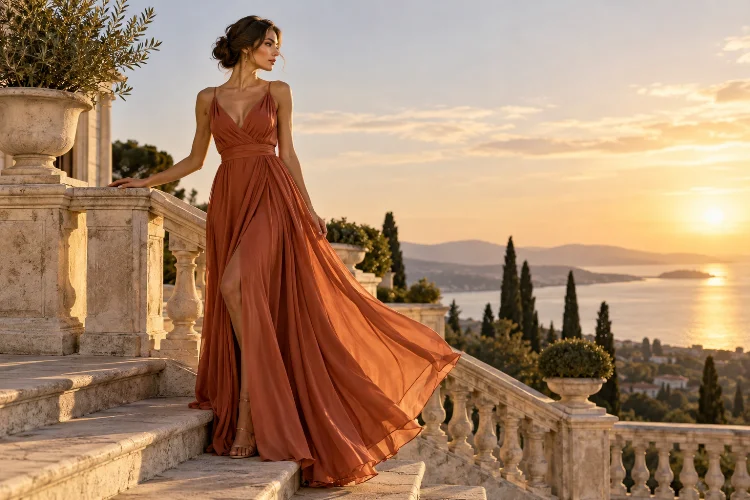
Summer style often looks effortless from the outside. A flowing dress, relaxed trousers, or a crisp shirt can appear incredibly simple, yet the difference between an ordinary outfit and an elegant one usually comes down to small decisions.
Length matters. Fabric movement matters. The position of the waist, the width of a trouser leg, and even the amount of visible skin between garments can completely change how an outfit reads.
That is why understanding advanced styling rules for creating elegant summer silhouettes can be more useful than simply following seasonal trends.
Instead of focusing only on individual pieces, sophisticated dressing considers the complete outline created by the body and clothing together.
Modern summer fashion also allows plenty of experimentation. Current styling embraces wide trousers, Bermuda shorts, lightweight tailoring, long dresses, sculptural shapes, and oversized shirts rather than relying on one ideal silhouette.
The goal is not to follow rigid rules. It is to understand visual structure well enough to make relaxed clothing look intentional.
1. Build the Silhouette Before Adding Details
Before thinking about jewelry, bags, prints, or color, look at the basic shape of the outfit.
Every outfit creates an outline. A fitted tank with wide trousers forms a completely different shape from an oversized shirt worn with the same trousers.
Elegant dressing usually begins with making that overall outline feel deliberate.
For example, balloon trousers already introduce significant volume. Pairing them with a draped or relatively controlled top keeps the volume visually interesting rather than random.
Vogue has highlighted this kind of proportion play in contemporary summer styling, including balloon trousers combined with softer, sculptural tops.
Stand several steps away from the mirror before deciding whether an outfit works.
From a distance, details disappear and the silhoutte becomes much easier to judge. If the shape still looks strong without relying on accessories, you have a solid foundation.
2. Control Volume Instead of Automatically Reducing It
Traditional styling advice often suggests balancing a loose garment with something fitted.
That works, but it is not the only option.
Modern summer fashion frequently combines volume with more volume. Wide trousers can work with oversized shirts, while long Bermuda shorts can be paired with relaxed button-downs. The important factor is controlling where the volume starts and ends.
Vogue’s recent summer coverage shows longer Bermuda shorts styled through clean tailoring, oversized shirts, tanks, and minimal footwear, proving that generous proportions can still appear polished.
If both the top and bottom are loose, create definition somewhere else. You might expose the wrist, open the neckline, tuck one section of the shirt, or choose footwear with a visually light profile.
The outfit does not necessarily need to become smaller.
It simply needs enough structure to prevent the fabric from wearing you.
3. Use Fabric Drape to Shape the Body Naturally
Two garments with identical measurements can create completely different silhouettes because of fabric.
A stiff cotton shirt maintains architectural volume around the shoulders. Linen softens as it moves, while silk or viscose can fall much closer to the body.
Understanding drape is therefore essential.
Linen remains particularly useful in summer because it combines airflow with enough natural structure to create refined trousers, shirts, dresses, skirts, and tailoring. Vogue describes the fabric as lightweight and breathable while still working across polished and relaxed wardrobe pieces.
Harper’s Bazaar similarly highlights contemporary linen pieces ranging from waistcoats and tailored shorts to fluid skirts and matching sets.
If you want a clean vertical silhouette, choose fabrics that fall rather than flare unpredictably.
If you want a sculptural effect, slightly firmer materials can create controlled shape.
The best summer outfit is not always the thinnest one. It is the one whose fabric behaves the way the silhouette requires.
4. Treat the Waist as a Styling Tool, Not a Requirement
Waist definition is one of the fastest ways to change proportion.
Tucking a shirt into high-rise trousers creates a clear visual division between the upper and lower body. Adding a belt to a loose dress can produce the same effect.
But elegant summer dressing does not always require a visible waist.
A straight linen dress, oversized tunic, or long shirt can create a beautiful column shape precisely because it avoids strong waist definition. The silhouette becomes longer and more fluid.
The trick is deciding deliberately.
If you define the waist, make it a clear part of the composition. If you hide it, allow the clothing to create another strong line instead.
A half-tucked shirt that appears accidental can look messy, while the same tuck placed carefully can make an outfit feel more refiend.
Think of waist placement as a visual switch rather than a universal rule.
5. Use Vertical Lines to Create Elegance
Vertical direction naturally gives an outfit a sense of continuity.
Wide-leg trousers that fall almost to the floor create one long line from the waist downward. A column dress works similarly by allowing the eye to travel without interruption.
Monochromatic outfits can strengthen this effect.
For example, ivory linen trousers paired with a cream shirt create less visual interruption than dramatically contrasting colors. Vogue’s linen styling coverage frequently uses coordinated separates and monochromatic combinations to create polished warm-weather looks.
Verticality does not require wearing one color from head to toe.
Open shirts, long necklaces, front seams, pressed trouser creases, and long lapels can also guide the eye downward.
Even a simple unbuttoned linen shirt over a fitted tank creates two vertical edges that visually lengthen the torso.
These subtle lines are one reason minimalist outfits can feel more elegant than heavily decorated ones.
6. Make Hemlines Work Together
Every hemline creates a horizontal break in the body.
That includes shirt hems, jacket lengths, shorts, skirts, trousers, and dresses.
The placement of those breaks influences proportion.
Bermuda shorts are a good contemporary example. Their longer length produces a stronger horizontal line than traditional short shorts, giving them a more tailored and substantial presence.
Vogue identified Bermuda shorts as an important summer silhouette and showed them working across minimalist, office, and casual styling.
When wearing longer shorts, consider where the top ends.
A fitted tank makes the shorts more dominant, while an oversized shirt creates a longer, relaxed upper section. Neither approach is automatically correct.
The same principle applies to midi skirts and cropped trousers.
Experiment until the horizontal lines look intentional rather than awkardly stacked.
7. Use Shoulders to Create Structure
Shoulders are one of the strongest architectural points of an outfit.
A crisp shirt with a clear shoulder seam immediately creates more structure than a soft sleeveless top. Light summer jackets, waistcoats, and tailored shirts can therefore make relaxed trousers or skirts feel more sophisticated.
This does not require heavy tailoring.
Recent runway and editorial coverage continues to show lightweight tailoring as a warm-weather option, with linen and light cotton constructions creating shape without the weight associated with traditional suiting.
A slightly stronger shoulder can also balance wider trousers.
Meanwhile, softer shoulders create a relaxed silhouette that works beautifully with flowing skirts or dresses.
Pay attention to where the actual shoulder seam falls. Even a basic white shirt can look dramatically different depending on whether the seam sits neatly at the shoulder or drops several centimeters down the arm.
8. Use Negative Space Between Garments
Elegant silhouettes are not only created by fabric.
Empty space matters too.
Exposed ankles beneath cropped trousers provide separation between clothing and shoes. An open neckline gives oversized shirts breathing room. Sleeveless tops reveal the shoulder line and make voluminous trousers feel visually lighter.
This is essentially negative space, a concept commonly used in art and design.
Imagine wide linen trousers, chunky shoes, and a fully buttoned oversized shirt. The outfit contains a large amount of continuous visual mass.
Simply opening two shirt buttons and rolling the sleeves can change the balance considerably.
You have not removed the volume – you have created spaces around it.
This technique is especially useful when styling oversized clothing in hot weather because it improves both visual lightness and practical comfort.
9. Let Footwear Finish the Line
Shoes can either continue the silhouette or interrupt it.
Minimal sandals tend to disappear visually, allowing trousers, dresses, or skirts to remain dominant. Chunkier shoes create a stronger base and can support garments with more volume.
With wide or floor-length trousers, streamlined footwear often allows the long vertical line to remain uninterrupted.
Bermuda shorts provide more freedom because the leg remains visible between the hem and shoe. Heels can sharpen the silhouette, while flat sandals create a more relaxed interpretation.
Vogue’s summer Bermuda styling demonstrates how the same long-short silhouette can move between polished and casual depending on footwear and accessories.
Always evaluate your shoes together with the trouser or skirt length.
A garment can appear perfectly balenced with one pair and strangely proportioned with another.
10. Keep Accessories Secondary to the Silhouette
Elegant outfits rarely need accessories competing with the clothing’s shape.
Once your silhouette is strong, accessories should reinforce it.
A narrow belt can strengthen waist definition. A structured tote can complement tailored clothing. A woven bag can soften crisp summer separates.
Scale also matters.
Large bags naturally introduce more visual weight, while small handbags keep the outline cleaner. Long earrings emphasize vertical movement around the face, whereas oversized sunglasses can strengthen the upper part of the silhouette.
The easiest strategy is to finish the clothing first.
Then ask whether each accessory adds something useful.
If removing an item makes the silhouette clearer, you probably did not need it.
Creating elegant summer silhouettes is less about owning complicated clothing and more about understanding how shape works.
Pay attention to volume, fabric drape, waist placement, shoulders, hemlines, footwear, and the vertical lines running through the outfit. Use fitted pieces when they provide useful contrast, but do not be afraid of oversized shapes when their proportions are controlled.
Most importantly, evaluate the full outline before focusing on small styling details.
Try experimenting with clothes you already own. Change the tuck of a shirt, swap the shoes, roll the sleeves, or remove a belt and observe how the entire shape changes.
Once you learn to see clothing as visual architecture, creating elegant summer outfits becomes far more instinctive.