
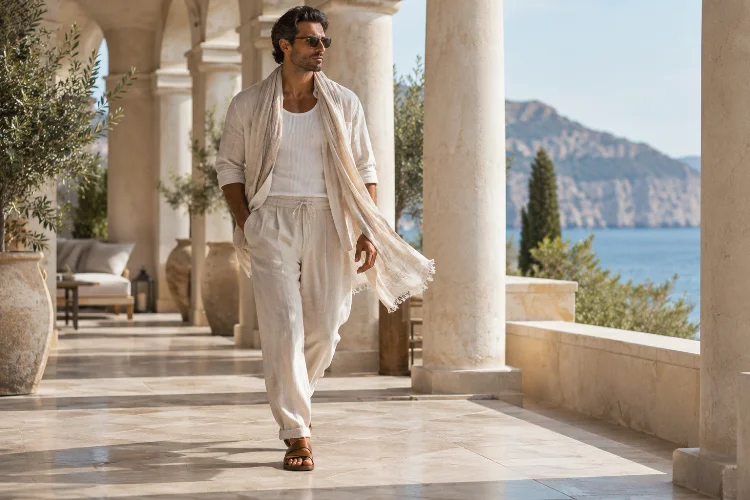
Layering and hot weather do not sound like natural partners. When temperatures rise, most people instinctively want to remove clothing rather than add another piece.
Yet some of the most polished summer outfits rely on layering.
The difference is that strategic layering techniques for refined hot weather dressing are not about piling garments on top of one another. They are about using lightweight pieces to create structure, movement, coverage, and visual depth without trapping unnecessary heat.
A breathable overshirt worn over a tank, a sleeveless waistcoat paired with fluid trousers, or a sheer layer over a simple dress can make an outfit feel more intentional while remaining practical.
Even functional concerns such as sun exposure and aggressive indoor air-conditioning can be addressed through smarter layering.
The real skill is knowing which fabrics, proportions, and combinations provide visual sophistication without making the outfit uncomfortable. Once you understand that balance, layering becomes one of the most useful tools in a warm-weather wardrobe.
1. Rethink What a Summer Layer Actually Does
Cold-weather layering is mainly about insulation. Summer layering should serve a completely different purpose.
Instead of retaining warmth, each additional piece should provide something useful: shade, structure, modesty, texture, or flexibility.
A linen shirt worn open over a tank is a good example. It changes the silhouette and provides additional coverage while remaining relatively airy. Vogue describes lightweight, breathable linen as a warm-weather staple precisely because it combines practicality with an easy, polished appearance.
This changes the way you evaluate an extra garment.
Before adding another layer, ask whether it contributes something the base outfit cannot accomplish alone. If it simply adds bulk, leave it out. If it improves proportion, sun coverage, or versatility, it has earned its place.
Summer layering should always feel intentonal, never automatic.
2. Build From the Lightest Base Possible
Successful hot-weather layering starts next to the skin.
Your first layer should generally be lightweight, comfortable, and easy to wear under another garment. Tanks, fine T-shirts, sleeveless tops, lightweight bodysuits, and simple camisoles work well because they create a clean base without excessive bulk.
Moisture management also matters.
REI’s layering guidance notes that a warm-weather base layer can improve comfort when it moves moisture away from the skin and helps it evaporate. The same principle applies outside technical clothing: a heavy or clingy base can make every additional layer feel hotter.
This is why a light tank beneath an oversized shirt often works better than layering two substantial shirts.
Keep details around collars, sleeves, and seams relatively simple as well. Too much fabric concentrated in one area can quickly make a summer outfit look—and feel—heavier than necessary.
Think light first, then add structure.
3. Make Linen and Cotton Your Primary Layering Tools
Fabric choice can determine whether summer layering succeeds or fails.
Linen remains one of the easiest fabrics to work with because it is lightweight, breathable, and visually textured. Vogue describes it as particularly suited to hot-weather dressing, while Harper’s Bazaar notes its ability to combine polish with comfort in warm temperatures.
Cotton poplin is another strong option.
It usually looks crisper than linen, which makes it useful when you want more structure. A cotton shirt over a tank, for instance, can create a sharper city outfit than a softer beach-inspired layer.
Lightweight hemp, fine knits, and selected performance fabrics can also work depending on climate and activity. Patagonia’s current hot-weather collection similarly emphasizes breathable, lightweight layers for warm and humid conditions.
What you generally want to avoid is stacking several dense fabrics together.
A heavy denim shirt over a thick cotton tee might technically be layering, but it is rarely the most practical approach during intense heat.
4. Use an Open Shirt as a Lightweight Outer Layer
Few pieces are as useful in summer as the open button-down shirt.
It functions almost like a jacket but usually feels significantly lighter.
A loose linen shirt over a fitted tank creates contrast between structured and relaxed shapes. Leave it unbuttoned to maintain airflow, or partially fasten it when you want a cleaner silhouette.
You can use the same technique over a swimsuit, a fitted dress, or a simple sleeveless top.
The styling advantage is flexibility. Remove the overshirt when the temperature rises, then put it back on when entering an air-conditioned restaurant, office, or airport.
Color matters here too.
White, pale blue, beige, olive, and soft striped shirts are especially versatile because they coordinate easily with neutral base layers.
The open-shirt formula is simple, but it creates a noticeably more refiend result than wearing the base garment alone.
5. Experiment With Sleeveless Tailoring
Not every layer needs sleeves.
A waistcoat or lightweight sleeveless blazer can provide the visual structure of tailoring without covering the arms.
This makes sleeveless tailoring particularly useful for refined summer dressing.
For example, a linen waistcoat worn over a minimal tank with wide-leg trousers creates multiple levels of structure while still leaving much of the upper body open.
Harper’s Bazaar has highlighted linen waistcoats, tailored shorts, and matching separates as modern ways to make linen feel more polished beyond traditional beachwear.
The key is keeping the underlying layer simple.
If the waistcoat already contains buttons, pockets, lapels, or a strong neckline, avoid pairing it with an equally detailed top.
You want one layer to provide architecture while the other stays visually quiet.
This prevents tailoring from becoming too formal or fussy for hot weather.
6. Use Loose Layers for Sun Coverage
Summer layering can also be functional.
Clothing provides physical protection from ultraviolet radiation, although the level of protection depends on factors such as fabric density, construction, color, fit, and UPF rating.
The Skin Cancer Foundation explains that a UPF 50 fabric blocks approximately 98% of UV rays, while loose-fitting clothing is generally preferable because tight fabric can stretch and allow more UV radiation through.
REI similarly recommends considering tested UPF ratings when selecting clothing designed specifically for sun exposure.
This creates an interesting summer styling opportunity.
Instead of relying only on bare skin to stay cool, consider lightweight long sleeves, relaxed trousers, or airy overshirts. These pieces can provide extra coverage while still allowing movement and ventilation.
A loose long-sleeve shirt over a tank is especially useful during outdoor lunches, travel days, coastal walks, or prolonged time in direct sunlight.
Protection and style do not have to compete.
7. Create Depth With Transparency and Texture
Layering becomes more interesting when the pieces do not all have the same visual weight.
A semi-sheer shirt over a solid tank, for example, adds depth while still looking light.
Fine knits can achieve the same effect. An open-weave top over a simple underlayer creates dimension without needing dramatic prints or multiple accessories.
Texture also helps neutral combinations feel richer.
Consider white cotton trousers, a ribbed tank, and a loosely woven overshirt. Even if everything stays within a cream-and-white palette, the difference between ribbing, weaving, and smooth cotton gives the outfit visual complexity.
This is particularly valuable when you want to avoid overstyling.
Instead of adding another necklace, bag charm, or bold pattern, let material contrast provide the interest.
Summer outfits usually look more sophisticated when the visual depth comes from fabric rather than excessive decoration.
8. Balance Volume Between Your Layers
Layering affects proportion, so silhouette deserves just as much attention as fabric.
If your outer layer is oversized, keep the base relatively streamlined.
A voluminous linen shirt over an equally oversized top can create unnecessary bulk. Pairing that same shirt with a fitted tank produces a cleaner contrast.
The same principle applies below the waist.
An oversized shirt with wide-leg trousers can still work, but you may need to create definition elsewhere through a tuck, exposed neckline, shorter hem, or structured footwear.
On the other hand, fitted trousers allow you more freedom to use a relaxed upper layer.
The objective is not to follow a rigid formula but to prevent every garment from occupying the same visual space.
Good proportion makes multiple pieces feel like one coherent outfit rather than several unrelated garments stacked together.
9. Prepare for Indoor and Outdoor Temperature Changes
One of the strongest arguments for summer layering has nothing to do with fashion.
Modern summer environments often involve constant temperature changes.
You might walk through intense heat, enter a heavily air-conditioned office, return outdoors for lunch, then spend the evening somewhere breezy.
A removable lightweight layer makes these transitions easier.
Vogue has previously highlighted breathable outerwear such as linen jackets, lightweight trenches, shackets, and vests as useful summer options precisely because warm days can still involve cooler indoor spaces or evening temperatures.
Rather than carrying a heavy jacket purely for air-conditioning, choose something that contributes to the outfit.
A linen overshirt, fine cardigan, unlined blazer, or lightweight scarf can all become functional styling elements.
The best summer layer is one you actually want to wear.
10. Apply the Two-Layer Rule Before Adding a Third
When layering in hot weather, restraint matters.
For everyday outfits, two visible clothing layers are often enough.
A tank plus an overshirt already creates contrast. A dress plus a lightweight cardigan does the same. Adding another visible layer should have a specific reason rather than simply making the outfit more elaborate.
This is where strategic layering differs from decorative layering.
Look at the outfit before adding anything else. If the silhouette already has structure, texture, and visual balance, stop.
Accessories can then provide finishing touches without increasing thermal weight.
A pair of sunglasses, minimal jewelry, leather sandals, or a clean handbag will usually complete the look far more effectively than another garment.
Sophisticated summer dressing is often about knowing when the outfit is finished.
Refined hot-weather layering is less about wearing more and more about choosing smarter pieces. Lightweight fabrics, breathable base layers, open shirts, sleeveless tailoring, and carefully controlled proportions can add dimension without turning summer dressing into an exercise in discomfort.
Use each layer for a clear purpose. It might provide structure, UV coverage, texture, or flexibility between hot streets and cool interiors.
Most importantly, resist the urge to keep adding pieces once the outfit already feels balanced.
Start experimenting with what you own: wear a linen shirt open instead of buttoned, layer a waistcoat over a simple tank, or introduce texture through a sheer overshirt. With a little practice, summer layering can feel just as sopisticated as cold-weather dressing – without the extra heat.